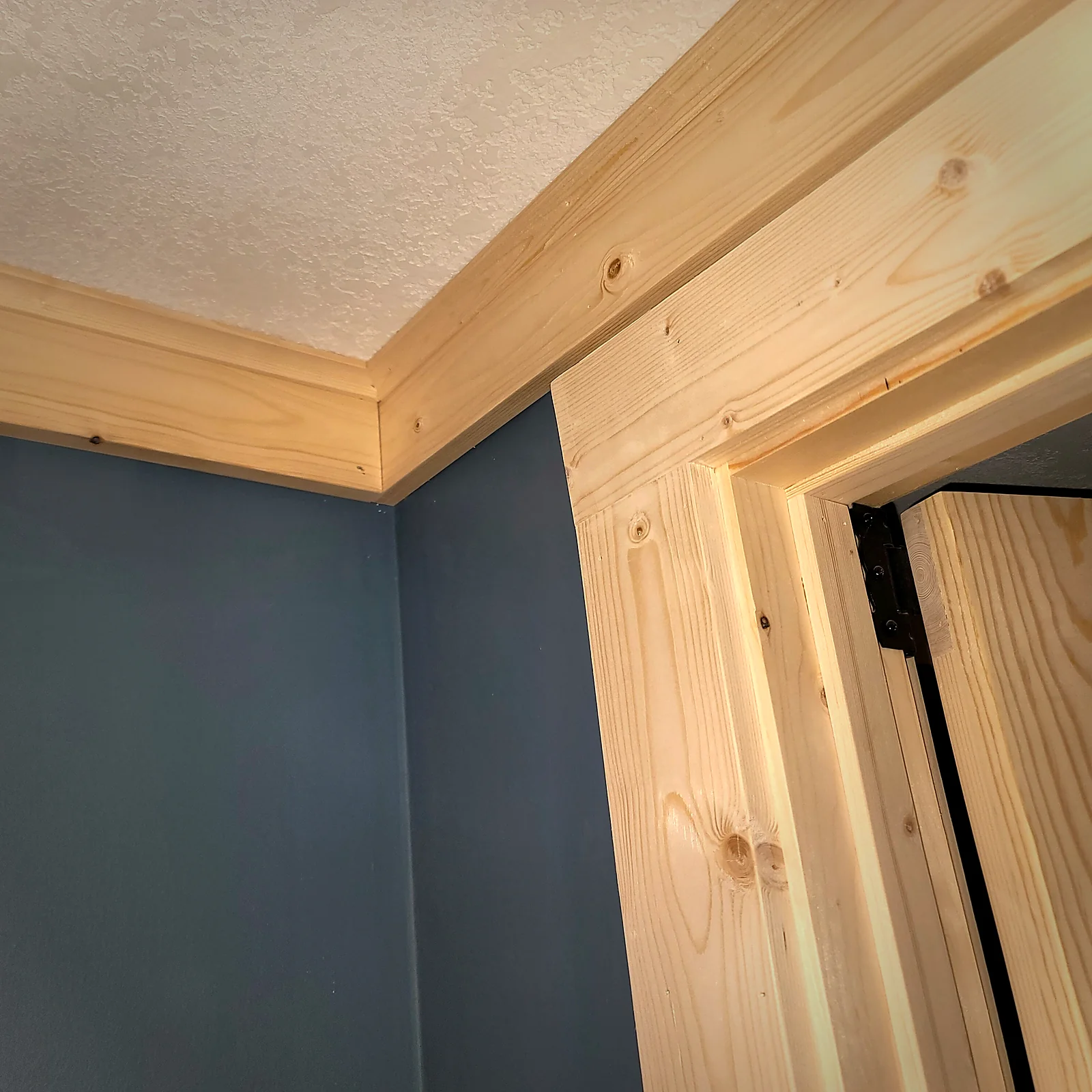
Crown molding, baseboards, casing, wainscoting, and door and window installation in Knoxville and East Tennessee.
Finish carpentry is most of what I do. It's the trim work that makes a room look finished — crown molding, baseboards, door and window casing, and wainscoting — and I also handle door and window installation itself, not just the trim around it. I cut and fit it by hand to the actual room, not a pre-cut kit.
Cut and coped to fit the room, not just butted at the corners.
Mitered and fit to the actual floor and wall lines.
Interior casing, fit square even when the opening isn't.
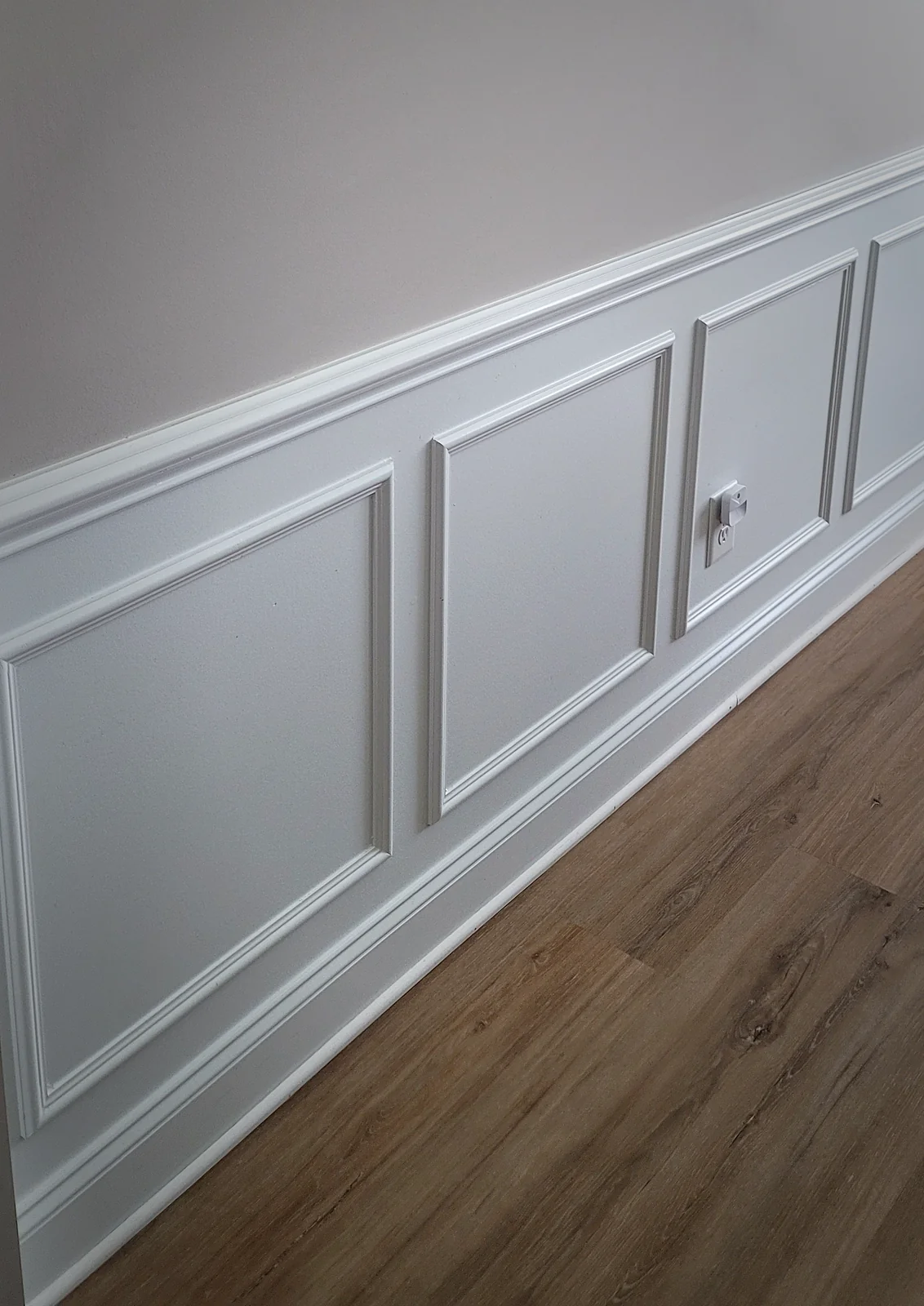
Recessed-panel wainscoting with matching crown and base.
Door and window installation, plus the trim and casing that goes around them.
One-off trim details that don't come pre-made.
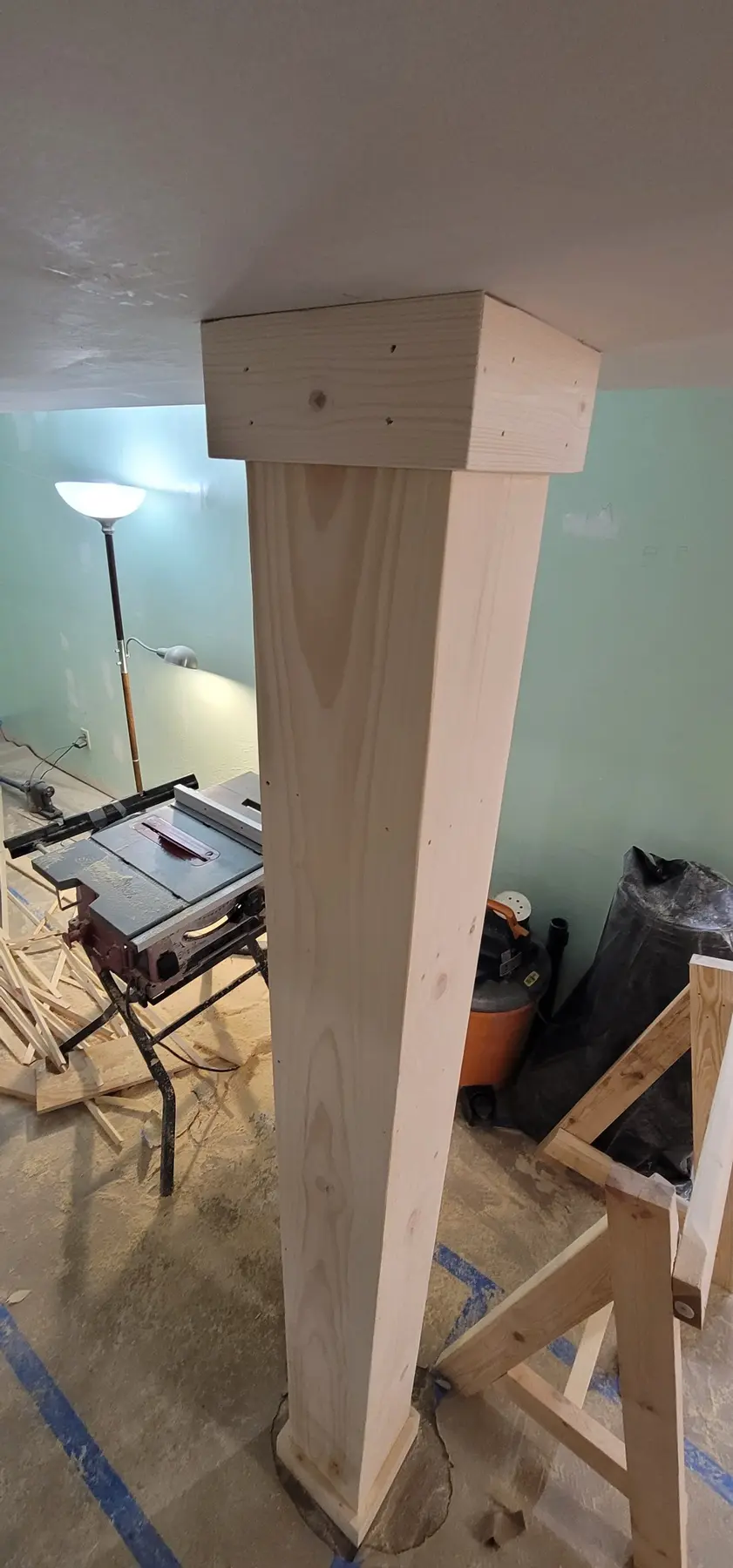
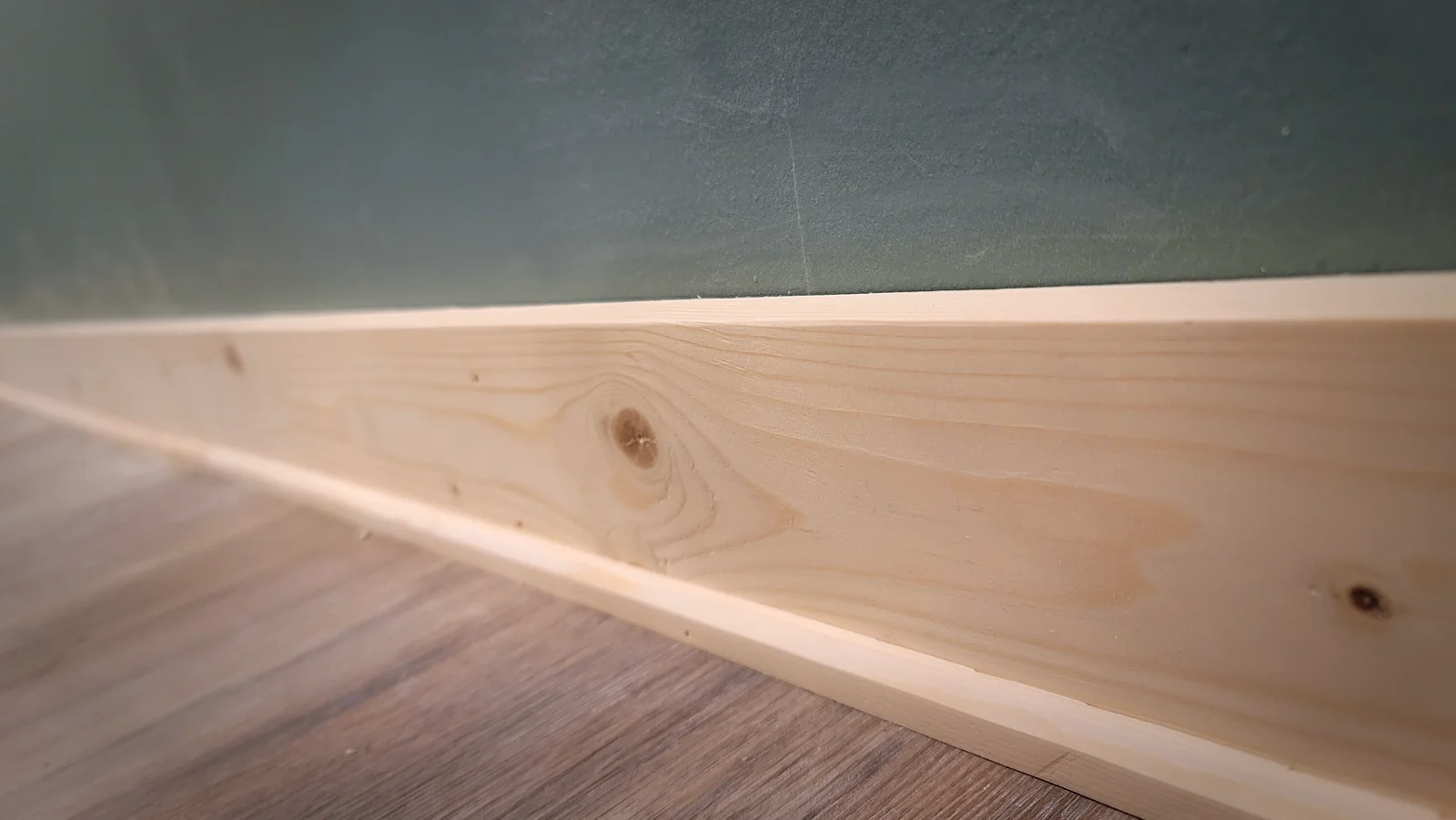
Pine trim cut and fit on site — from a custom stair handrail to the tongue-and-groove utility nook and access door, shown here mid-cut, mid-install, and finished.
Squaring up pine stock for the custom stair handrail, on site.
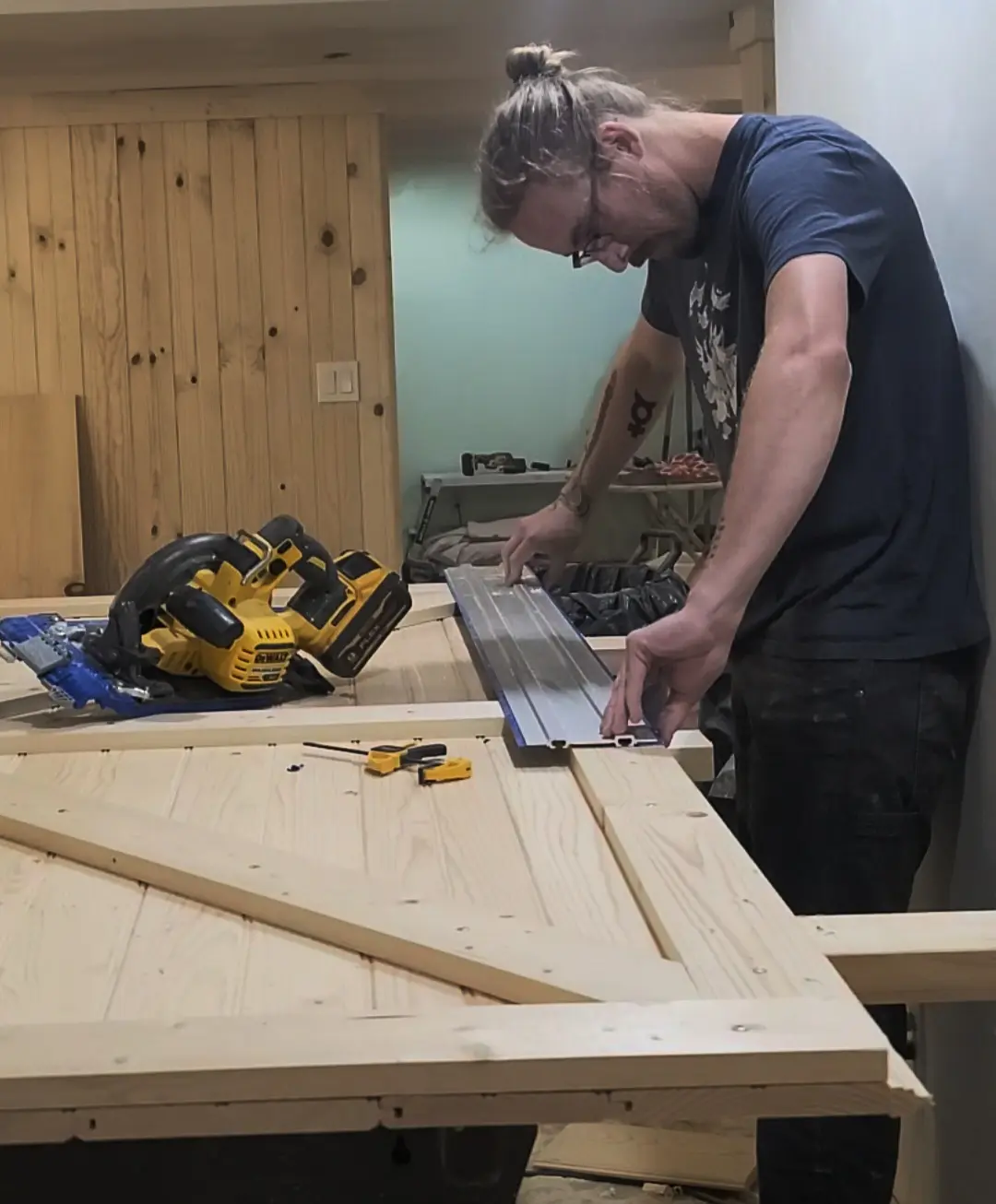
Squaring up pine boards for a built-in door panel.
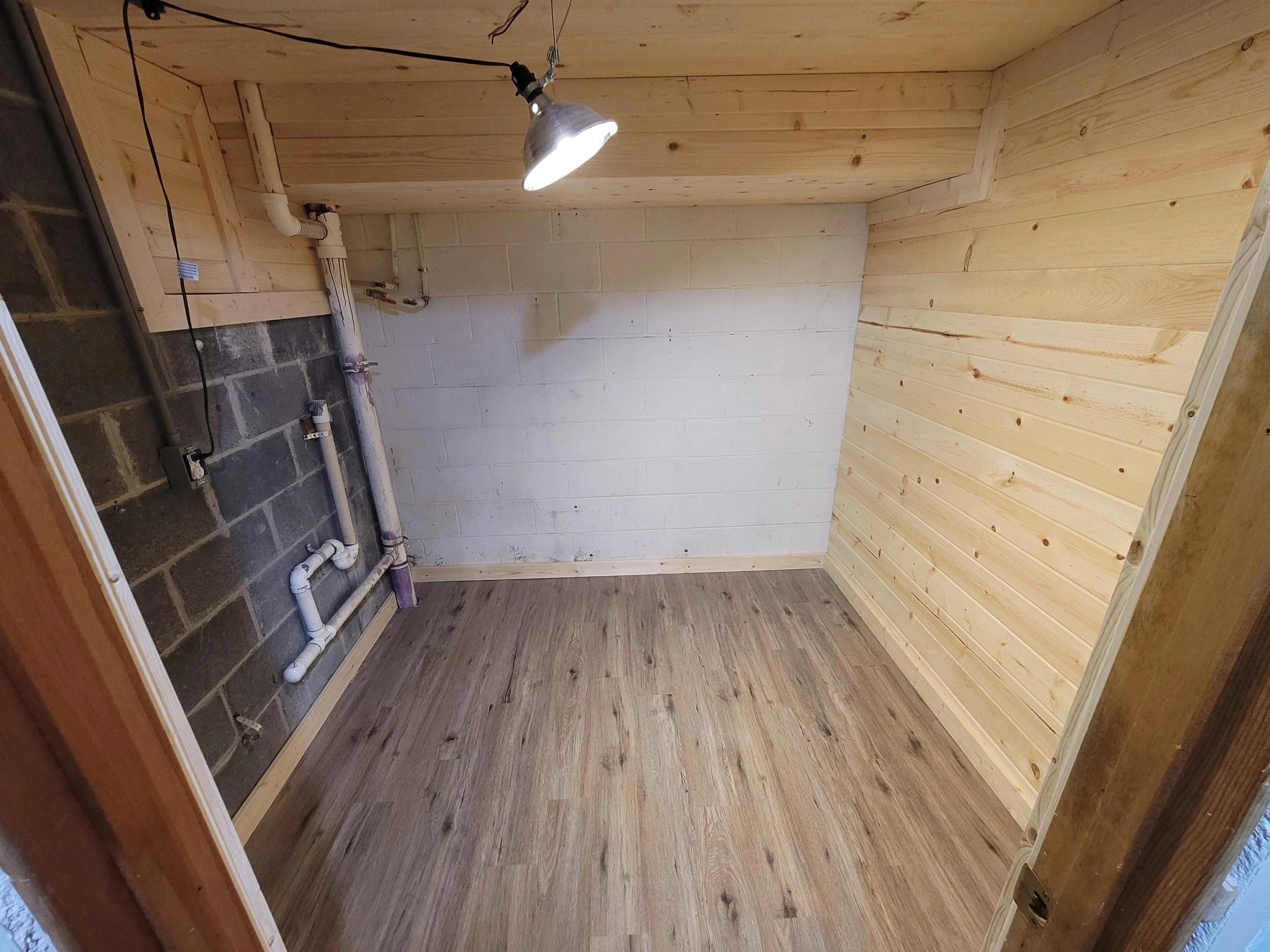
Tongue-and-groove pine walls and ceiling, trimmed and fit to the opening, with two flush-mounted access doors.
Finish carpentry is the last thing to go in and the first thing people notice when it's done wrong. Gaps at the ceiling line, baseboard that doesn't sit flat on an uneven floor, casing that's square to the wall but not to a door that's slightly out of plumb — these are the details that separate a professionally trimmed room from one that just has trim in it.
If you're looking for quality finish carpentry in Knoxville, the short version is this: I cut and cope crown molding instead of just mitering and caulking the gaps, I scribe baseboard to the actual floor line instead of assuming it's level, and I measure every opening individually rather than running one spec down a whole hallway. On an older East Tennessee home with settling, plaster walls, or additions that don't quite line up, that's usually the difference between trim that looks right and trim that fights the room.
My background is in cabinet design and production as well as hands-on carpentry, so I think about reveals, grain direction, and how paint-grade versus stain-grade trim will actually look once it's finished — not just whether a piece of wood is nailed to the wall.
Paint-grade trim (usually finger-jointed pine or MDF) is the common choice for crown, baseboard, and casing that will be painted to match the walls or trim color — it's cost-effective and takes paint cleanly once caulked and filled. Stain-grade trim is solid wood, chosen and installed to show off the grain, which means tighter joinery and more care at every seam since there's no caulk line to hide a gap. I work in both, and can tell you honestly which one makes sense for your room and budget before we start.
Based in Knoxville, TN, taking on trim and millwork projects throughout the surrounding area.
Yes — that's most of what makes crown molding install skilled work rather than a straight cut-and-nail job. I scribe and cope joints to the actual ceiling and wall lines instead of assuming everything is square, which is common in older Knoxville-area homes with some settling.
Paint-grade trim is typically finger-jointed pine or MDF, finished with caulk and paint to hide seams — cost-effective and durable. Stain-grade trim is solid wood installed to show the grain, which takes tighter joinery since there's no caulk line to cover a gap. I'll walk through which fits your room and budget during the estimate.
In most cases, yes. I can match an existing trim profile for an addition, a single room, or a repair so new work blends with what's already in the house, rather than looking like a patch.
I install recessed-panel and tongue-and-groove wainscoting as well as crown, baseboard, casing, and chair rail — the basement project shown on this page includes a full pine tongue-and-groove wainscoted stairwell and nook.
Both. I install interior and exterior doors — hanging, shimming, and leveling the jamb — and then trim and case the opening, so the door and the trim around it are handled as one job instead of two separate trades.
Both. I install windows as well as the casing and trim around them, so the window and the finish work around it are handled as one job.
Most rooms that need trim also need cabinetry, a built-in, or a fuller remodel. These are the services I most often pair with finish carpentry work.